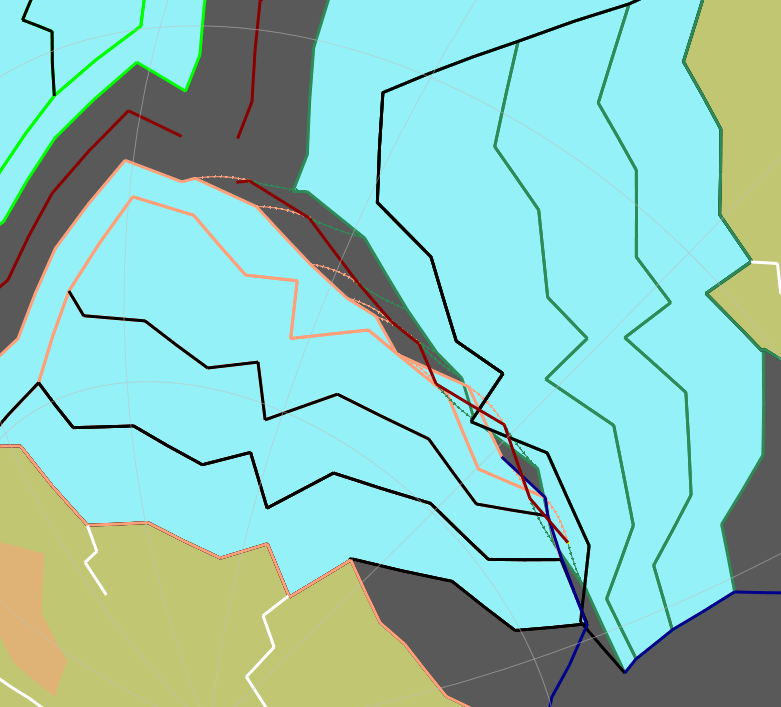
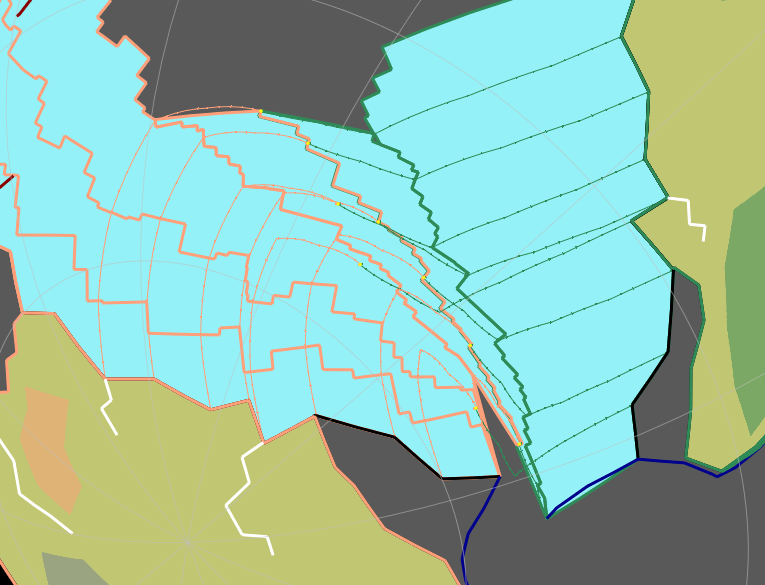
This is a problem with the method used in these worldbuilding scenarios because it treats the features like structurally rigid monoliths. Tracing the vertices from even before the latest timestep the middle of your lowest ridge already crossed over itself. This problem existed before the one you’re trying to solve now.
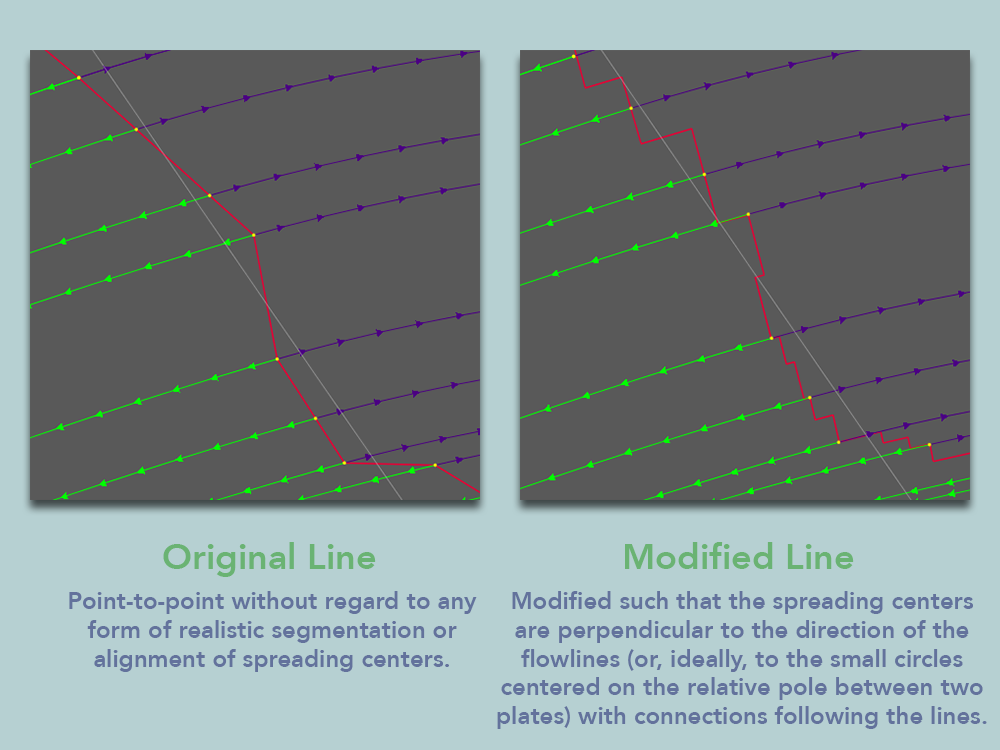
The actual spreading centers are ideally perpendicular to the axis of movement, and then they get offset by the transforms faults. The spreading centers themselves can change over time. They can segment, they can line back up (more or less), and they can overlap temporarily.
The crust itself can also stretch, especially at slower ridges. There are detachment faults which can individually be 10+ km apiece which - in the aggregate - can add up to quite a lot of lateral movement which is hard to reflect in a rigid plate. Off-axis heating can also cause ridges to “jump” and extinct the earlier ridge which functionally attaches the older piece of crust to the other side and starts spreading elsewhere.
When you get to this point, it might be worthwhile to jump to an earlier timestep and check to see what impact you’d get if you simply changed the location of the ridge and attached the earlier piece to the other side. You can even demo it by copying the new crust in the latest timestep but set it’s time to the earlier one, rolling it back, and then watching how they interact.
There is also something else to be said about redrawing the ridge between major timesteps. The nice and easy big lines are great for abstracting, but they cannot model even at least the slightest tendency for the axes of the spreading centers themselves to reorient. This isn’t to say that you can’t have subduction from overlapping plates, but barring some major event forcing the edges back together (like the collapse of a back-arc basin from a collision) or something like a major plume-head initiating subduction it seems from what I’ve read that it’s far more likely for the axis of spreading to move to a different area.
The flexibility of the crust in an overhead view from the combination of normal, transverse, and detachment faulting gives a lot of wiggle room for the crust to stretch and accommodate the change in direction.
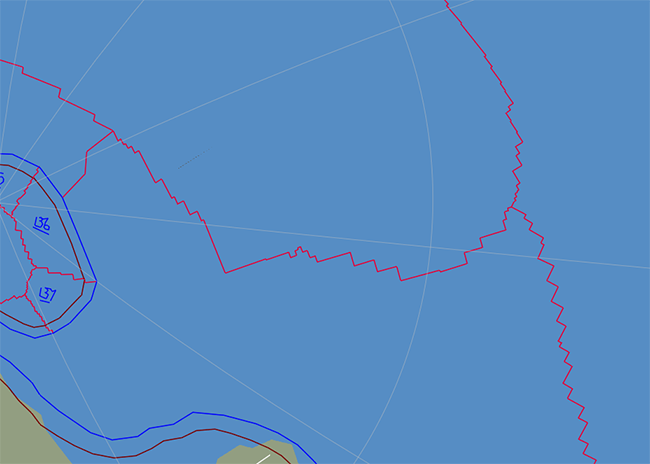
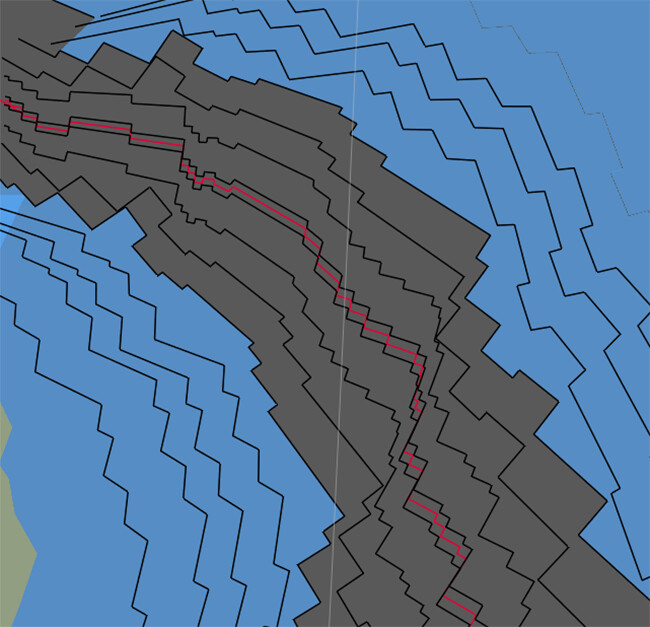
I’ve made this image to describe something I’m working on with another, and I have two more from a current project to illustrate.
Is it perfect? No. But you can use the MOR itself to make “Guides” on a Guides layer (which makes it super easy to use topologies to make later features") and make major changes at later timesteps. The top of these two images is basically redrawn to match flowlines and the second image shows a rift influenced by two later major changes in direction which necessitated a reorientation of the spreading center axis.
When you have a ridge jump, you can even copy the old MOR to an “Inactive Ridge” feature set to help you in the future when you’re either looking to make bathymetry of your oceans or maybe do something like inform when you’ll have a likely flat-slab subduction event that makes a Laramide-style orogeny when the ridge subducts.
Hope this helps!